The way an author makes a character feel real is called characterisation.
There are two types:
| DIRECT Characterisation | INDIRECT Characterisation |
|---|---|
| TELLS the character’s traits. | SHOWS the character’s traits. |
| Ms Roberts is a clumsy person. | As Ms Roberts entered the room, she tripped on the mat and spilt her coffee everywhere! |
There are five ways you can SHOW a characters traits. We can use the acronym STEAL to remember them:
| S | Speech | Shown through how your character talks and what they say. | “Dang it!” Ms Roberts said, “That’s the third time I’ve done that this week!” |
| T | Thoughts | Shown through what your character thinks. | Gosh, Ms Roberts thought, that is going to bruise. |
| E | Effect on others (Relationships) | Shown through other character’s reactions to your character, and how they interact with your character. | The students sighed. They knew she did this all the time. |
| A | Actions | Shown through how your character acts. | As she stood, Ms Roberts skidded in the spilled coffee and knocked Sally’s table. |
| L | Looks (Appearance) | Shown through your character’s appearance, e.g. facial expression, dress, hair. | Finally, Ms Roberts remained upright, with coffee spilled on her shirt and a bruise forming on her knee. |
Here is a video which explains it in another way using Frozen:
What is your character’s personality? How have you shown that in your story writing?
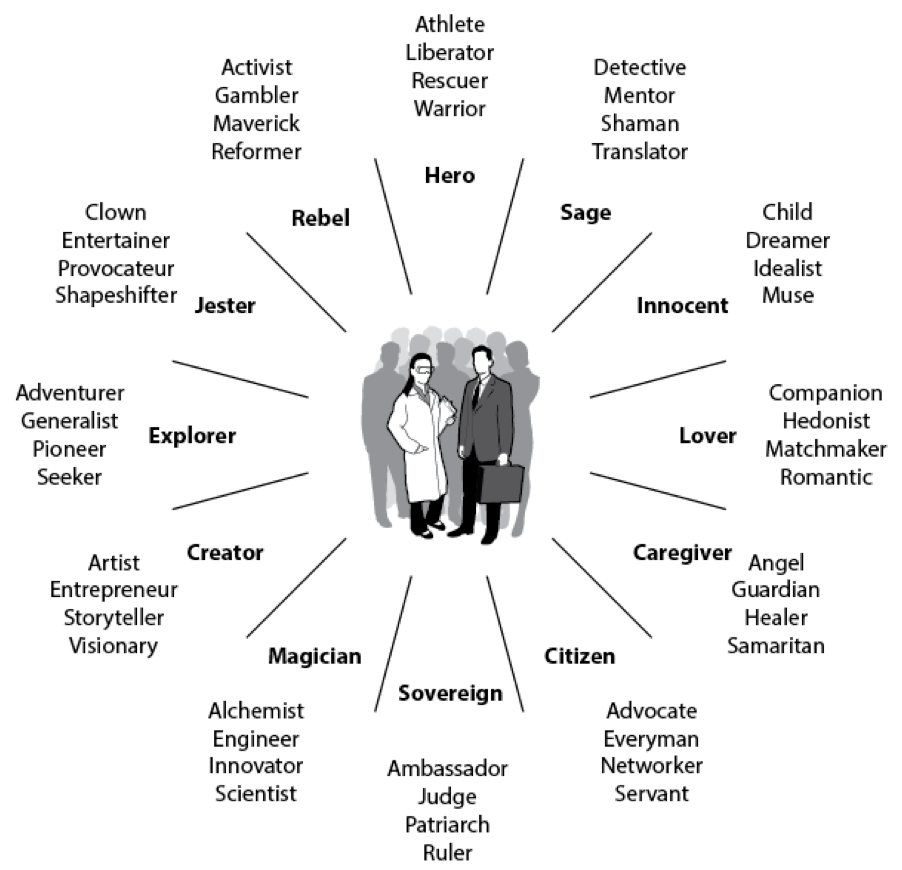
Archetypes
There are some stereotypical types of characters called ‘archetypes’. These archetypes are shown in stories old and new. The benefit to making your character an archetype is that they are immediately familiar to your audience. They are especially popular in childrens stories.
 Ms Roberts' Lesson Stuff